
For travelers seeking authentic cultural experiences, the islands and shores of Lake Victoria in western Kenya offer a living history book. The story of the Abasuba (Suba) people is a captivating tale of migration, resilience, and cultural fusion, set against a backdrop of stunning natural beauty. This guide delves into their origins, celebrates their vibrant festivals, and explores the complex tapestry of their identity.
Part 1: The Bantu Heart of the Abasuba
The Abasuba are a Bantu ethnic group, distinct from their Nilotic neighbors, who are native to the Lake Victoria basin. They are primarily fishermen and farmers with a rich cultural heritage of music, dance, and tradition.
Genetic and historical studies confirm their origins lie with the Bantu-speaking peoples who migrated into the region from West Africa around 2000 years ago. Upon settling, they assimilated with indigenous communities and, later, with the Luo. This has resulted in a unique mixed ancestry, with significant Bantu and Nilotic genetic markers.
Despite this complex history, the Abasuba have maintained a unique cultural identity, though their language and traditions have faced significant challenges.
Part 2: A Closer Look at Specific Clans
The term “Suba” encompasses a diverse collection of clans, each with its own history. Some groups, like the Waondo, Kamenya (Jokomenya), and Warowo (Joarowo), have a distinct origin story that blurs the line between Luo and Suba.
The Saga of Ondo, Omenya, and Wamulanda
This story begins ten generations ago with a migrant from Alego who settled in Uyoma due to population pressure and conflict. He had four sons: Ondo, Omenya, Oring’o, and Arowo.
Ondo became a successful farmer with many servants. One servant, Wamulanda, was a Nyang’ori migrant. Wamulanda impregnated Ondo’s daughter, Kayanja, and eloped with her across the lake to Mirunda in South Nyanza. After Kayanja died in childbirth, Wamulanda returned, was forgiven by Ondo, and established the Kayanja lineage in Mirunda.
Years later, the descendants of Ondo (the Waondo), Omenya (the Kamenya), and Arowo (the Warowo) crossed the lake to join Wamulanda’s descendants, forming a military alliance. This history reveals that the Waondo, Warowo, and Kamenya are of Luo ancestry but are often historically grouped with other Suba people, while the Kayanja are of Nyang’ori (Terik) origins.
The Suna of Migori County
Another significant Suba group, also referred to as Suna, lives in present-day Migori County. They are a western Bantu group, heavily assimilated by their Luo neighbors, and are divided into numerous clans like Katiga, Kadika, Wagire, Wasweta, and many more. The 2019 census estimates their population at about 200,000, making them the third-largest group in Migori County.
Part 3: The Challenge of a Fading Identity
A central theme of modern Suba history is cultural assimilation. As the Luo people expanded, the Suba were heavily influenced. Intermarriage was common, and Luo customs were often maintained. This, combined with colonial administrations that viewed them as a Luo sub-group and education systems that used English and Luo, led to a dramatic decline in the use of the Olusuba language.
Today, fluent Olusuba speakers are typically of an advanced age, and the community faces the challenge of preserving its unique identity. Remedies proposed by community members include publishing an Olusuba Bible to encourage literacy and reviving traditional circumcision practices with modern safety standards.
Part 4: Experiencing Suba Culture Today: The Rusinga Festival
The best way to witness the vibrant spirit of the Suba people is by attending the annual Rusinga Festival, held every December at Suba Raha on Rusinga Island.
Why Visit Rusinga Island?
Rusinga is the most accessible island on Lake Victoria, connected to the mainland by a bridge from Mbita, making it just a 20-minute drive. You can also arrive by small plane or boat.
Festival Highlights:
The festival is an African “mini-Olympics” in a stunning setting, featuring:
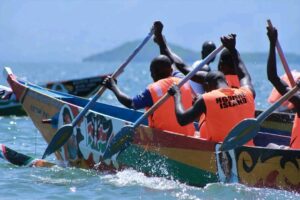
Boat races for men and women.
Swimming contests in the lake.
Tug of war and other traditional games.
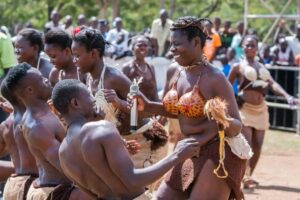
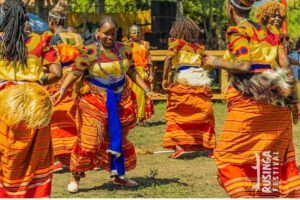
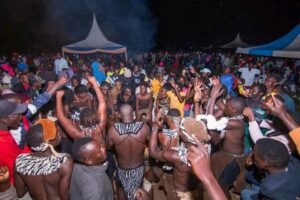
Cultural dances and performances.
Culinary delights to treat your taste buds.
Live music from top artists like Prince Inda and Odongo Swag.
Beyond the Festival:
While there, tourists can also visit the iconic, bullet-shaped Tom Mboya Mausoleum and explore the beautiful beachfront resorts. The festival also serves as a perfect base for exploring further afield to the pristine Takawiri Island, the historic Mfangano Island, and the bird-watcher’s paradise, Birds Island.
Explore the Heart of Suba Culture with Afrivibe Rentals
This rich history is not just a story—it’s an experience waiting to be had. From the sacred sites on Mfangano to the vibrant energy of the Rusinga Festival, the lands of the Suba people are a treasure to explore.
Let Afrivibe Rentals be your trusted travel partner. We provide reliable and comfortable transport solutions across the entire Western Kenya circuit. We can take you to the Rusinga Festival in December 2025 and help you explore Rusinga, Mfangano, and the surrounding islands.
Click to Chat on WhatsApp and Plan Your Trip
Call/SMS: 0710899460
Website: www.kisumuairportcabs.co.ke
Your journey into the heart of Suba culture starts with us.